Why Trade Quotes Go Cold, and How to Follow Up Without Chasing
Ask most owners of a growing trade business where their quotes go after they're sent, and you'll get an honest shrug. Some get accepted, some get knocked back, and a big share just go quiet. Nobody is quite sure whether the customer went elsewhere, put the job off, or forgot to reply.
That quiet middle is where a lot of revenue sits. In our experience it's rarely a pricing problem. It's a follow-up problem, and follow-up is a system problem rather than a people problem.
Quotes don't usually lose on price
When a quote goes cold, the instinct is to assume the number was too high. Sometimes it was. But when you actually look back through a few months of open quotes, a different pattern tends to show up:
- The quote went out days after the site visit, by which time the customer had already moved on.
- Nobody followed up at all, because nobody owned the follow-up.
- Someone followed up once, got no answer, and it dropped off their list.
- The customer had a question about scope or timing, couldn't get hold of anyone, and booked whoever answered the phone.
None of those are about price. They're about time and ownership.
Why follow-up falls through the cracks
In a business with three or four people, the owner usually does the quoting and remembers every job. That works until it doesn't. Once you have a few estimators, an office team and technicians across more than one area, quotes start living in too many places: an inbox, a quoting tool, a spreadsheet, someone's notebook, the back of a technician's mind.
The follow-up step is the first thing to slip because it has no natural trigger. A new enquiry makes noise. A booked job makes noise. A quote that's been sitting for six days makes no noise at all. Unless something in your system raises it, it waits.
Some teams also hold back because following up feels pushy. So they leave it, assuming the customer will call if they're interested. Plenty would have, if someone had made it easy.
What good quote follow-up looks like
The businesses that convert well aren't doing anything clever. They're doing a few simple things consistently.
Every quote has an owner. One named person is responsible for it until it's won or lost. Not "the office".
Every quote has a status that means something. Sent, viewed, followed up, accepted, lost, and a reason when it's lost. If a quote can sit in "sent" forever, it will.
Follow-up happens on a schedule, not on memory. A common pattern is a check-in a couple of days after sending, another around a week, and a final one before the quote expires. The exact timing matters less than the fact that it happens every time.
The follow-up is useful, not pushy. "Just checking in" isn't much of a reason to call. Better reasons: confirming the customer received the quote, answering a question about scope, offering an available start date, or reminding them the quote is due to expire. Each contact should give the customer something.
Accepting is easy. If a customer has to print, sign, scan and email a quote back, some won't. A clear accept button removes a reason to delay.
Accepted quotes turn into jobs straight away. This is the step people forget. A customer who says yes and then waits several days to hear about a booking date can still change their mind.
Build it into the system, not the to-do list
Most of the above can be done with a whiteboard and good intentions, but that doesn't scale past a handful of people. What holds up is letting the system carry the process, so staff work a list rather than remember one.
This is how we set it up for customers on Salesforce Field Service.
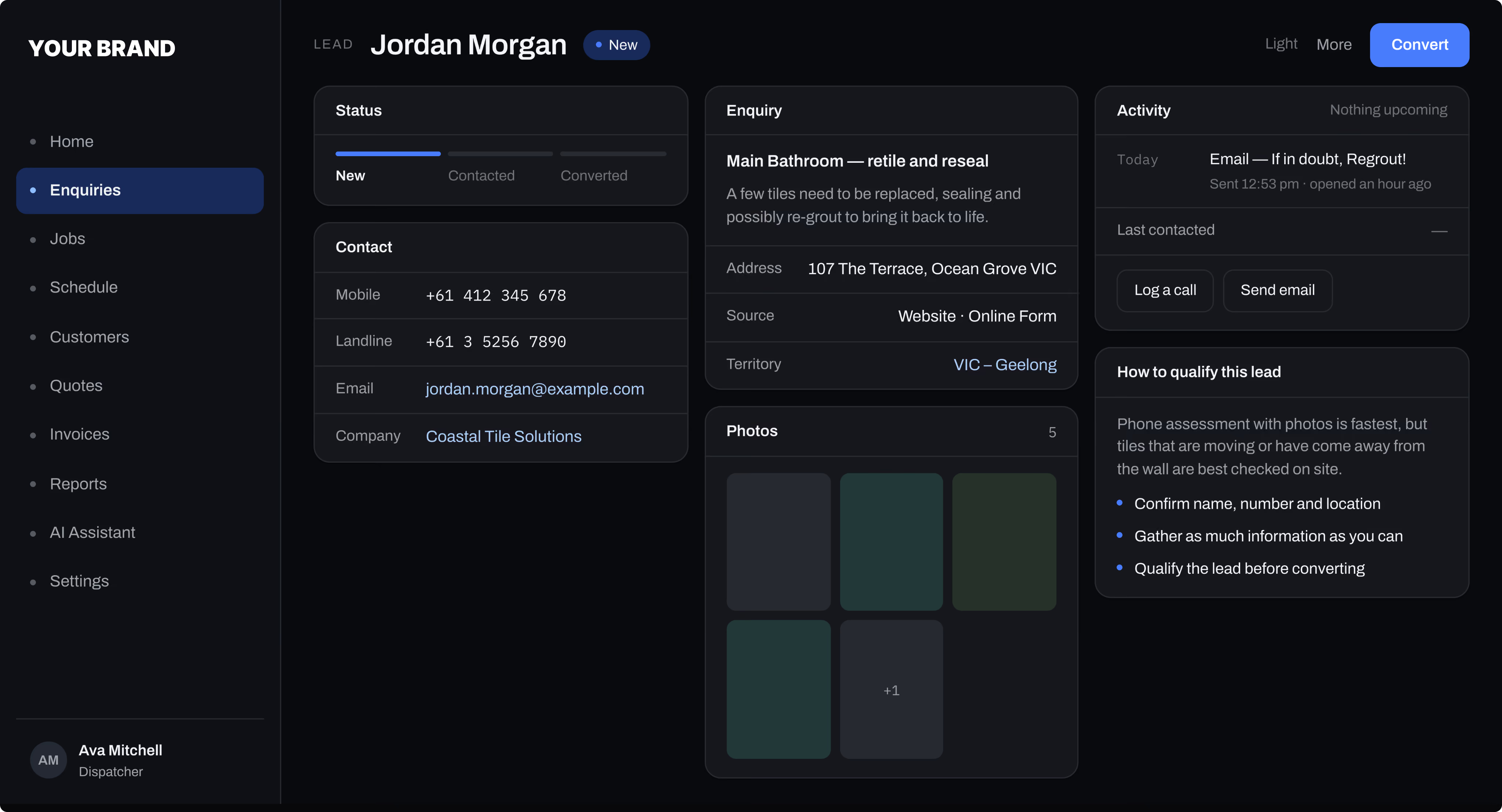
One record from enquiry to job. The lead, the site visit, the quote and the eventual work order all hang off the same customer record. When someone picks up the phone, they can see the whole history without asking the customer to repeat themselves.
Automatic tasks and reminders. When a quote is sent, follow-up tasks are created for the owner on the right dates. If the quote is accepted or lost, the remaining tasks close themselves.
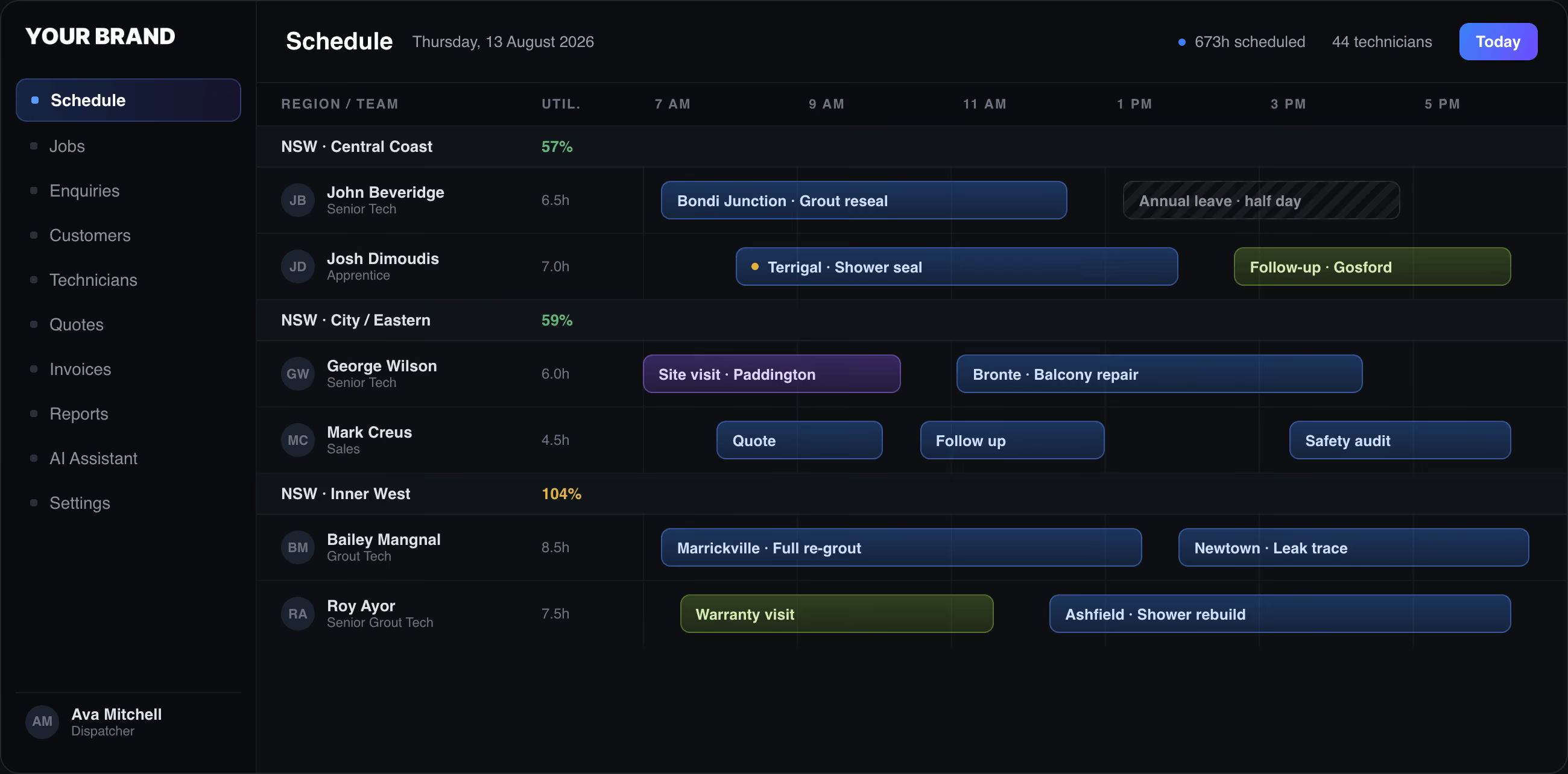
Simple reporting on open quotes. An owner or ops manager can see, at a glance, how many quotes are open, how old they are, who owns them and what the conversion rate looks like by estimator, service or region. Where customer data is spread across other systems, Data 360 can bring it together so the numbers reflect the whole business. You can't fix what you can't see.
A clean handover from quote to job. When a customer accepts, the work order is created with the scope, pricing and site details already attached, and it lands straight in the dispatch schedule.
We didn't design this in theory. Servly was built out of the Salesforce platform that runs The Grout Guy, which has 150+ technicians across six states and handles more than 50,000 jobs a year. At that volume, a quote that slips through the cracks is not a one-off. It's a pattern.
Tightening this end of the process was part of what moved lead conversion up 20% at The Grout Guy. The same work cut work-order entry from roughly two business days to about 15 seconds, which mattered because an accepted quote turned into a scheduled job while the customer was still keen, not days later. Less manual handling between sales and the schedule also helped move the dispatcher-to-technician ratio from about 1:4 to 1:25+.
Where AI agents fit
This is one of the more practical uses of AI agents in a trade business, as long as it's kept to the right jobs. An agent can:
- send a timely, personalised follow-up based on what was actually quoted
- answer routine questions about the quote, such as what's included or how long the job takes
- offer available booking windows and confirm a time once the customer accepts
- flag quotes that need a human, like a scope change or a customer who sounds unhappy
What it shouldn't do is negotiate price or make promises your team hasn't agreed to. The agent handles the routine contact so your estimators spend their time on the conversations that need judgement. In a Salesforce setup, an Agentforce agent can work from the same quote and customer records your team uses, so nothing it does sits outside the system.
A simple place to start
You don't need new software to find out how much this is costing you. Try this over the next fortnight:
- Pull a list of every quote sent in the last 90 days.
- Mark each one as won, lost or no response.
- For the no-response group, note how long the quote took to go out and how many follow-ups it got.
- Pick ten of the most recent ones and call them.
Most owners who do this find the no-response pile is bigger than they expected, and that a fair share of those customers still haven't had the work done. That's usually the clearest sign the follow-up process needs to live somewhere other than people's memories.
When we start with a new customer, this is the kind of thing our Operational Assessment looks at: how enquiries come in, how quotes are built and followed up, and where jobs stall between a yes and a booked time. It gives you a clear picture of where the gaps are before any system decisions are made.
If you'd like to talk through how your quoting and follow-up works today, you can reach us at servly.au/contact.
Explore more blogs