Growing a Trade Business into a New Region: What Breaks First
Opening a second region is one of the biggest steps a trade business takes. On paper it looks simple: the same services, the same pricing, a new patch of map and a few more technicians. In practice it tests every system you have, including the ones you didn't know you had.
Most of what made the first region work lives in people's heads. The owner knows which technician is best on a tricky job. The office knows which suburbs take forever to get to. Quotes get checked because someone glances over them at the end of the day. None of that travels to a new city on its own.
Here's what tends to break first, and what to set up before it does.
Dispatch stops being one person's job
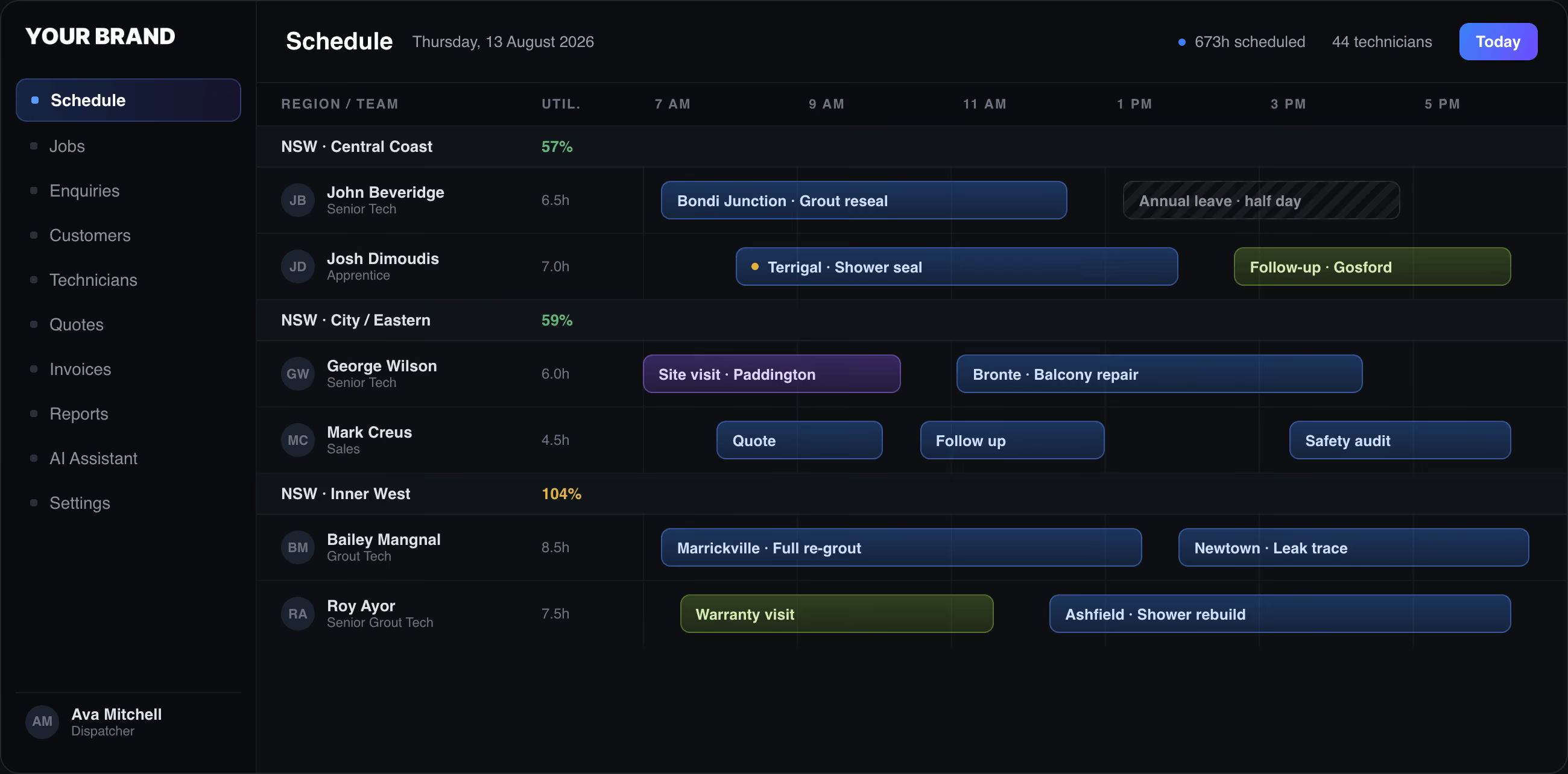
In a single region, dispatch is often one experienced person with a whiteboard, a phone and a very good memory. They know every technician's skills and every regular customer. It works because one person can hold the whole picture.
Add a second region and that picture splits. Either the same person tries to run both and starts making slower, riskier calls, or a second dispatcher starts up in the new area and does things their own way. Within a few months you have two businesses sharing a logo.
What helps:
- Set up each region as its own territory in the system, with its own technicians, working hours and travel areas.
- Keep the scheduling rules the same everywhere: how long each job type takes, which skills it needs, and how urgent work is prioritised.
- Let the system suggest the schedule, and have dispatchers handle the exceptions rather than build every day from scratch.
This is the difference between dispatch that scales and dispatch that just adds headcount. On the Salesforce platform that runs The Grout Guy, the dispatcher-to-technician ratio moved from about 1:4 to 1:25+. A big part of that comes from dispatchers managing exceptions instead of placing every job by hand.
Standards drift without anyone deciding to change them
The second thing to go is consistency. A new region hires its own people, and each of them brings habits from previous jobs. Quotes start to look different. Job notes get shorter. One region takes photos before and after, the other doesn't bother.
Nobody decides to lower the standard. It just drifts, because the standard was never written into the process. It was something the original team picked up by working next to each other.
What helps:
- Standard job types. Every service has a defined job type with the steps, checklist, photos and sign-off it needs. The technician's mobile app shows the same steps in every region.
- One price book. Pricing comes from a single source, with regional adjustments set deliberately rather than made up on the day.
- Templates for quotes and customer messages. Customers in every region get the same experience, whoever they deal with.
When the process is in the system, a new technician in a new city does the job the same way as someone who has been with you for years.
The owner loses sight of the numbers
In one region, an owner can feel how the business is going. They see the vans, hear the phones and know roughly what came in this week. Across two or three regions, that feel disappears. By the time a problem shows up in the accounts, it has usually been going on for months.
The usual workaround is a weekly spreadsheet that each region fills in. It's late, it's inconsistent, and someone has to chase it.
What helps is one set of data for the whole business, with the same definitions everywhere. A job, a quote, a callback and a completed visit should mean the same thing in every region. Then the reporting is simple to build:
- jobs booked, completed and outstanding by region
- quote conversion by region and by estimator
- first-time completion and callbacks
- average travel time between jobs
- revenue and outstanding invoices
Where some of that information lives in other systems, such as accounting or marketing tools, Data 360 can bring it together into one view. The point isn't more reports. It's being able to compare regions properly and spot a problem in week two, not month six.
The phones get harder to answer
More regions means more enquiries, often from customers who don't know or care which branch they're calling. If each region has its own number and its own office hours, calls get missed and leads go to whoever answers first.
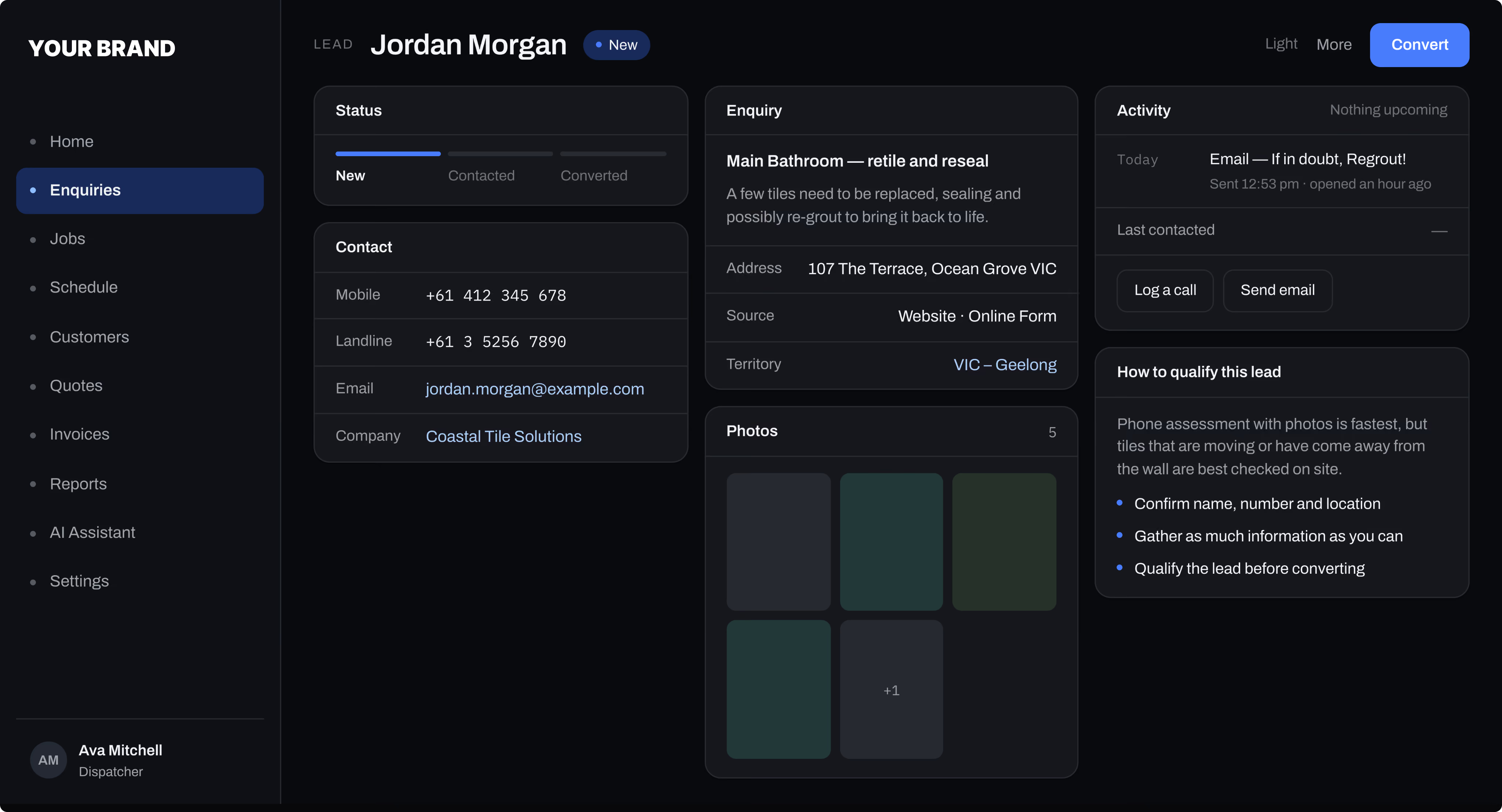
A central approach usually works better. Enquiries come into one place, get matched to the right region by address, and get booked into that region's schedule. This is a good place for an AI agent. An Agentforce agent can take after-hours enquiries, answer common questions, check availability in the right region and book a time, then pass anything unusual to a person in the morning. It works from the same customer and job records as your team, so the booking lands exactly where a dispatcher would have put it.
Set up before you expand, not after
The common mistake is waiting until the second region is open and struggling before fixing the systems. By then you're making changes while the business is under pressure, with new staff who are still learning.
It's far easier to get the foundations right in the region you already have, then copy them. A useful test is to ask: if we opened a new region next month, what would a new dispatcher, technician and office person need on their first day? If the answer is "a few weeks sitting next to someone who knows how we do things", the process isn't ready to travel yet.
A short checklist before you expand:
- Every job type is defined, with steps, durations and required skills.
- Pricing comes from one place.
- Dispatch runs on rules, not one person's memory.
- Technicians work from a mobile app that guides the job and captures notes, photos and sign-off.
- Reporting works the same way for one region as it would for five.
It can be done
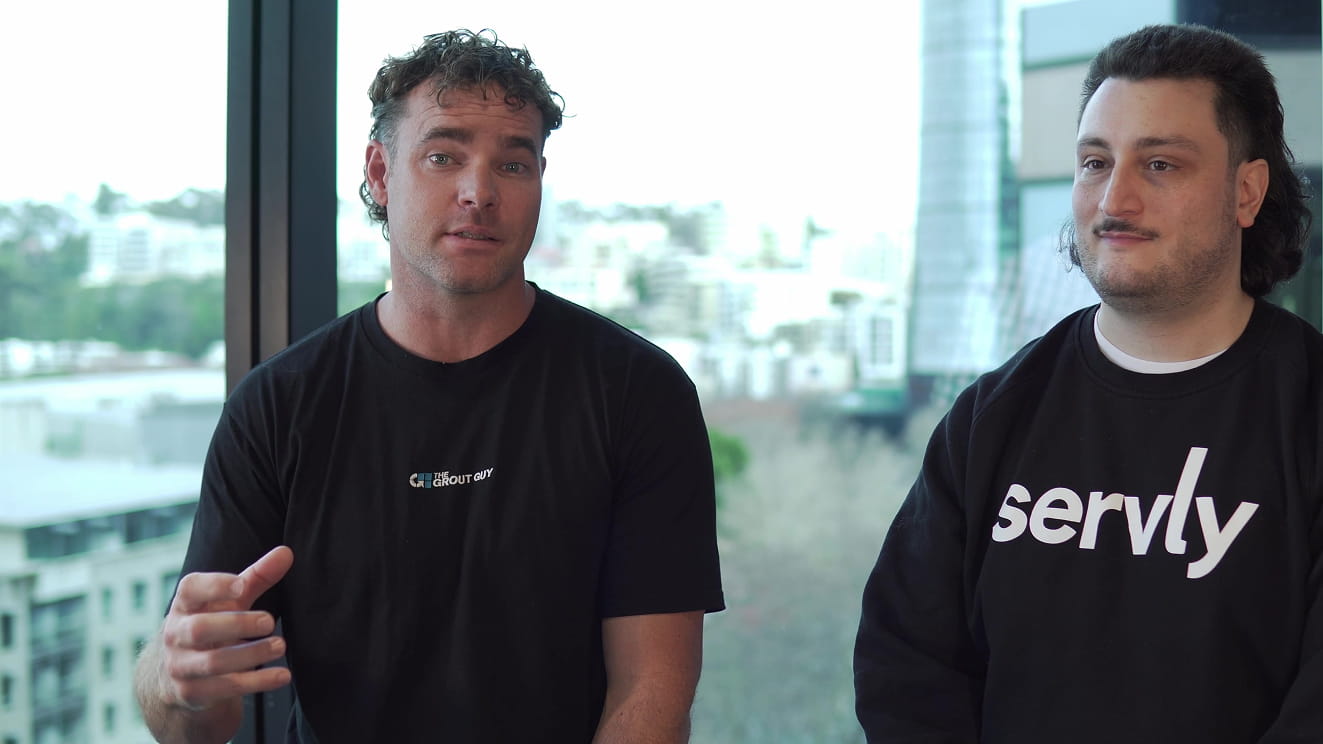
The Grout Guy runs 150+ technicians across six states and more than 50,000 jobs a year. That scale is only manageable because the way the work is quoted, scheduled, done and reported is the same in every region, and it's held in the system rather than in people's heads. Servly was built out of that platform.
If you're planning to expand, our Operational Assessment is a good place to start. It looks at how your current region runs today and what would need to change before a second or third region can run the same way.
If you'd like to talk it through, you can reach us at servly.au/contact.
Explore more blogs