New Financial Year, New Systems: What to Review Before Locking In Another Year on Your Current Software
EOFY has a way of making a business look at its numbers properly, once a year, whether it wants to or not. Budgets get set, contracts get renewed, and somewhere in that process, software subscriptions usually just roll over — the same licences, the same spend, sometimes without anyone actually checking whether it still matches how the business operates.
If your renewal or budget conversations are happening now, this is the best window all year to actually look, rather than just renew.
Why EOFY is the right moment to check, not just budget
Most software decisions get made once, at implementation, and then left alone. A year of growth, a new location, a shift in how the team actually works — none of that gets reflected in the licence mix unless someone deliberately goes looking. EOFY forces the budget conversation anyway, which makes it the natural moment to also ask: does what we're paying for still match what we actually need?
What to actually check before you renew anything
What are you paying for that nobody's using?
Licences accumulate the way any subscription does — a tool bought for a specific push last year, an add-on trialled and forgotten, seats for a role that's since changed. A proper review looks at actual usage data per licence, not just the invoice line items.
Does your current setup match how the business operates today, not how it operated when it was built?
A business running two technicians out of one location has different needs to the same business running twelve technicians across three. If the system hasn't been reconfigured since the operation changed shape, there's a good chance it's quietly costing time somewhere — extra manual work, workarounds, information that doesn't flow the way it should.
Is there a capability gap sitting alongside the bloat?
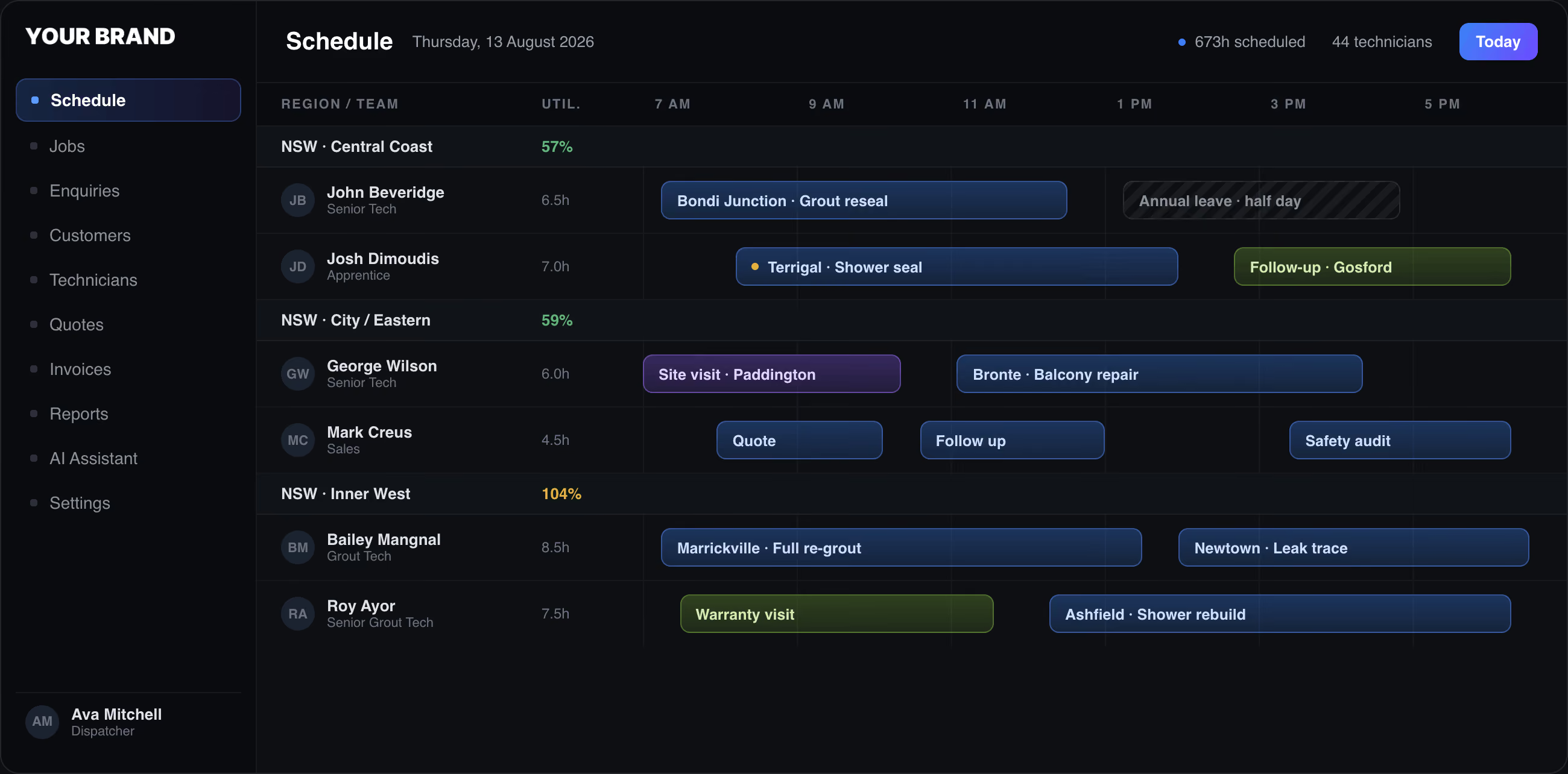
Licence waste and licence shortfall often coexist in the same account — paying for things that aren't used while going without things that are actually needed. Scheduling efficiency, AI-driven lead handling, and mobile field tools are common gaps in trades businesses running an older or under-configured setup.
Who's actually accountable for this review happening?
In a lot of businesses, nobody owns it. The invoice arrives, someone in finance pays it, and the licence mix just persists. If there's no clear owner for "does our tech stack still make sense," that's usually why it hasn't been looked at.
What good looks like once you've actually reviewed it
A proper review isn't just about cutting cost — though removing genuinely unused spend often does bring the invoice down. It's about making sure the same money is being spent on the right things. That might mean reallocating spend from an unused add-on into scheduling or AI capability the business is actually missing, rather than just shrinking the bill.
For businesses on Salesforce specifically, this is also the moment to check who actually holds the commercial relationship behind the account — sometimes called the Outsourced Service Provider, or OSP. An account that's sat under a generalist partner, or one with no specific trades or field service expertise, tends to accumulate exactly this kind of mismatch between what's licensed and what's needed. Moving the relationship to a specialist doesn't require touching the underlying system — the org, data, and configuration stay exactly where they are — but it does mean the account gets reviewed by someone who actually understands what a trades business needs from it.
A short checklist before you sign anything
- Pull actual usage data for every licence on the account, not just the list of what's been bought
- Compare current team size and structure against what the licence mix was originally built for
- Identify any capability the business is missing that's costing time through manual workarounds
- Confirm who's accountable for reviewing this annually, not just paying the renewal invoice
- If you're on Salesforce, check whether your account is with a partner who actually specialises in your industry
None of this takes long relative to the size of a year's software spend. The businesses that skip it tend to be the ones still asking the same question at next year's EOFY, having paid for the same mismatch twice.
Servly is an authorised Salesforce Outsourced Service Provider (OSP) working with Australian trade and field service businesses on licensing, implementation, and account reviews. If your renewal is coming up and you haven't looked closely at what you're actually paying for, get in touch — a review costs nothing to start with a conversation.
Explore more blogs